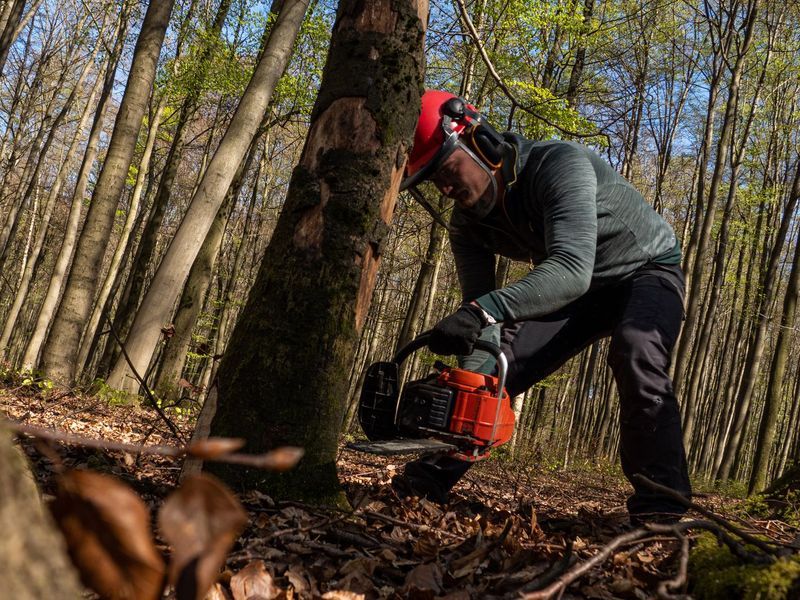
Omaha homeowners often ask whether winter or summer is best for tree removal. In practice, access, ground conditions, and safety usually matter more than the calendar.
A sound, non-hazardous tree can often be removed in different seasons. Winter may mean fewer leaves to handle and, when the ground is frozen, less damage from equipment on a soft lawn. But ice, snow, wind, and short days can delay work or make access unsafe.
Spring and fall can also work well, though wet ground may rut easily and busy periods can affect scheduling. In Omaha, the practical choice is the first safe window when the crew can reach the tree without causing avoidable damage. Ask how the company plans to protect turf, paving, gardens, and irrigation.
The Omaha area gets thunderstorms, strong winds, heavy rain, snow, and ice. The National Weather Service’s Omaha/Valley office tracks local warnings and storm reports. A storm can leave cracked limbs or a split trunk that looks stable from the ground but isn’t safe to approach.
After severe weather, avoid climbing or cutting damaged trees yourself. Keep clear of hanging limbs and downed wires, and contact the utility about lines. If the tree threatens a home or blocks access, tell the tree service exactly what happened and whether the structure or street is in immediate danger.
Much of eastern Nebraska has fine-textured soils, including silty and clayey soils, but the soil at an individual property can vary. When ground is saturated, heavy trucks and lifts can leave deep ruts or compact the soil. Slopes and narrow yards can make that risk worse.
Ask the crew whether it can use mats, smaller equipment, or a different route. If the tree is not urgent, waiting for firmer ground may be sensible. Frozen ground can help protect the lawn, but it doesn’t guarantee a job will be safe or that thawing won’t create soft spots.
A dead tree, a fresh crack, a hanging branch, or a trunk leaning more after a storm deserves prompt attention. Don’t wait for a preferred season if the tree could fall on people, a house, or a public area. Keep children and pets away, and don’t park beneath damaged limbs.
For an immediate threat to life or a building, call 911. For power lines, stay well back and call the utility. For a city-owned tree or a tree in the right-of-way, contact the responsible city department before arranging removal. In Omaha, start with Public Works; other nearby towns have their own offices and procedures.
If the tree is healthy and removal is optional, consider nesting birds and local wildlife before setting a date. Check the current guidance from Nebraska Game and Parks or a qualified local professional, especially if you see an active nest. Safety work should still be handled promptly when a tree is dangerous.
The best timing also depends on what follows. If you plan to replant, ask about suitable species and spacing for the site, utility lines, and mature canopy size. If you’re removing a tree before construction, check with the city first; a site plan, public-tree rule, or development condition may affect the schedule.
Also in our network: Best Time for Tree Removal in Iowa City: Seasonal Guide, Best Time for Tree Removal in Rockford, IL.
Send us a few details and a photo and we will get you a free quote.
Get my free quote OMAHA
OMAHA